From The CSRD Brief
Insights
Plain-English CSRD, ESRS and Omnibus explainers and updates, written for the people who have to report. New entries land here as the rules move. For the regulatory updates on their own, see The CSRD Brief.

CSRD Penalties and Enforcement: Who Actually Checks Your Sustainability Statement - and What Happens If It's Wrong
There is no EU-level CSRD fine. Enforcement runs entirely through national law, which means 27 different supervisors, 27 penalty ceilings and 27 answers to "who is personally liable". With Wave 1 FY2024 reports now under review, here is how the enforcement map actually looks.

Your Sustainability Statement and Your Packaging Are Now Legally Coupled: What EmpCo Means for CSRD Reporters
From 27 September 2026, EU consumer law reads your ESRS E1 data against your marketing claims. Here's what the EmpCo Directive bans, what it requires, and why your sustainability statement is now evidence.

The ESG Rating Black Box Just Got a Window: What Regulation 2024/3005 Means for Rated Companies
From 2 July 2026, EU Regulation 2024/3005 requires ESG rating providers to disclose their methodologies, materiality lens, and separate E, S and G scores. Here's what that means for IR and sustainability teams being rated.

ESAP European Single Access Point: What CSRD Reporters Need to Know Before 2028
ESAP goes live in July 2027. CSRD sustainability data follows in January 2028. Here's what the phased rollout means for your reporting process - and what to fix now.

CBAM's Definitive Period Has Started: What CSRD Reporters Need to Do Now
CBAM's financial obligations began 1 January 2026. If you import CBAM goods and report under CSRD, your embedded-emissions data pipeline should be feeding both - not running in parallel.

ESRS S4 Consumers and End-Users: A Practitioner's Guide for CSRD Reporters
ESRS S4 covers your company's impacts on consumers and end-users. Here's what it requires, how the double materiality gate works, and why the 2025-2026 deferral is not the same as an exemption.

CSRD Software Buyer's Guide 2027: What the July 2026 ESRS Revision Changed - and What to Buy Now
The July 2026 ESRS revision cut mandatory datapoints by over 60%. If you're scoping CSRD reporting software against the old spec, you're buying the wrong thing. A vendor-neutral guide for Wave 2 buyers.

SFDR Meets CSRD: The Data Supply Chain That Was Never Fully Built
SFDR 2.0 demands cleaner, categorised sustainability claims from financial products - at the exact moment CSRD scope cuts have thinned the corporate data those claims depend on. A practical analysis of the four gap types and what to do about them.

CSRD for Non-EU Companies: The Article 40a Regime Most Groups Are Still Ignoring
The Omnibus narrowed Article 40a - it didn't delete it. Here's the complete guide to CSRD's separate, later, and differently-standardised regime for non-EU parent companies.

CSRD Data Collection: A Step-by-Step Playbook for Audit-Ready ESG Data
Move from ad-hoc spreadsheets to a repeatable, audit-ready CSRD data process. A practical 6-step playbook for sustainability leads and finance controllers.

What the First CSRD Reports Actually Revealed: Lessons for FY2027 Preparers
EFRAG's State of Play 2025 and Datamaran's analysis of 300+ first CSRD reports expose the real gaps. Here's what Wave 2 companies must act on before FY2027.

ESRS 2 General Disclosures: The Practitioner's Guide to the Mandatory Baseline
ESRS 2 is the one CSRD standard every in-scope company must apply - no materiality gate, no opt-out. Here's what it requires, how the revised 2026 version changes it, and how to get ready.
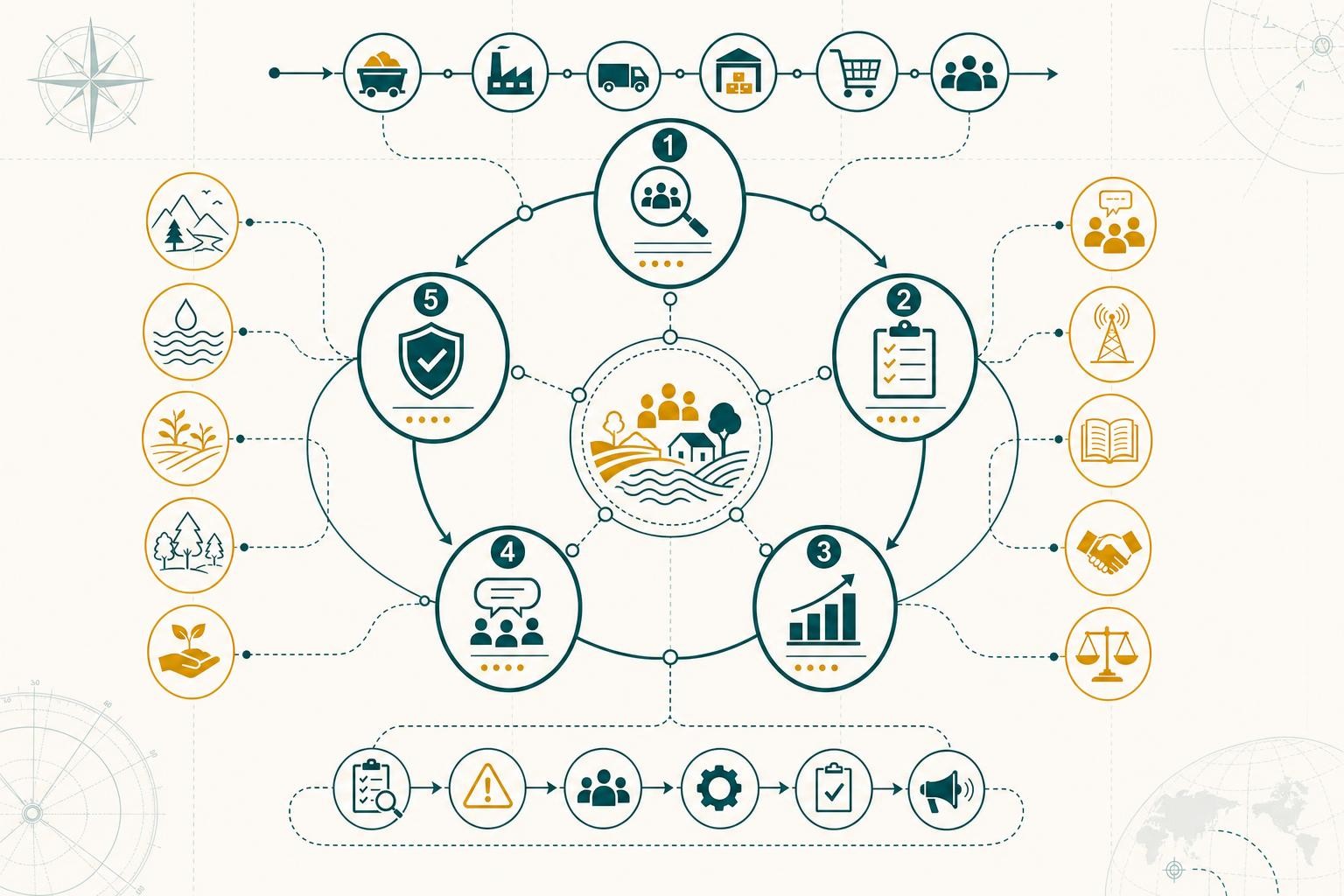
ESRS S3 Affected Communities: A Practitioner's Guide to Disclosure and Due Diligence
A plain-English guide to ESRS S3: what affected communities means, how double materiality works, the five disclosure requirements, and the CSDDD link - updated for the July 2026 revised ESRS.
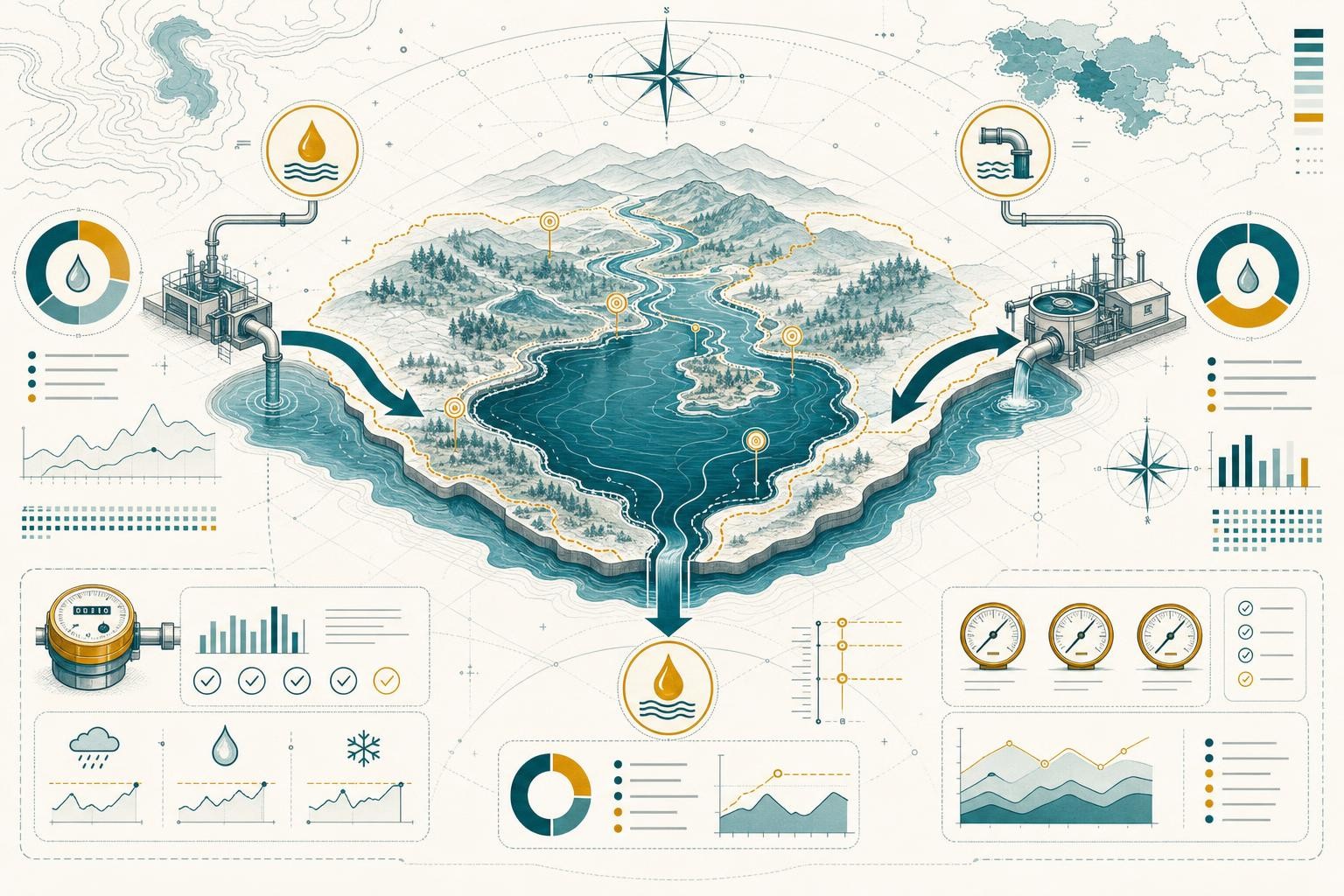
ESRS E3 Explained: A Practitioner's Guide to Water and Marine Resources Reporting
A plain-English guide to ESRS E3 - what it covers, how double materiality screens it in, the five disclosure requirements, and how to get your data ready for FY2027.

ESRS E2 Pollution: A Practitioner's Guide to Disclosure Under the Revised CSRD
A plain-English guide to ESRS E2 Pollution: what it covers, how double materiality determines whether it applies, every disclosure requirement explained, and a practical data-readiness checklist.

CSDDD After Omnibus I: A Plain-English Guide for Legal, Compliance and Sustainability Teams (2026)
The Corporate Sustainability Due Diligence Directive (CSDDD/CS3D) was substantially amended by Omnibus I in February 2026. Here is what in-scope companies need to know now.

ESRS S2 Workers in the Value Chain: A Practical Guide for Sustainability and Procurement Teams
ESRS S2 covers labour and human rights impacts on your suppliers' workers. This plain-English guide explains who is in scope, the four disclosure requirements, how ESRS 2026 simplifies the standard, and what the value chain cap means for supplier data collection.
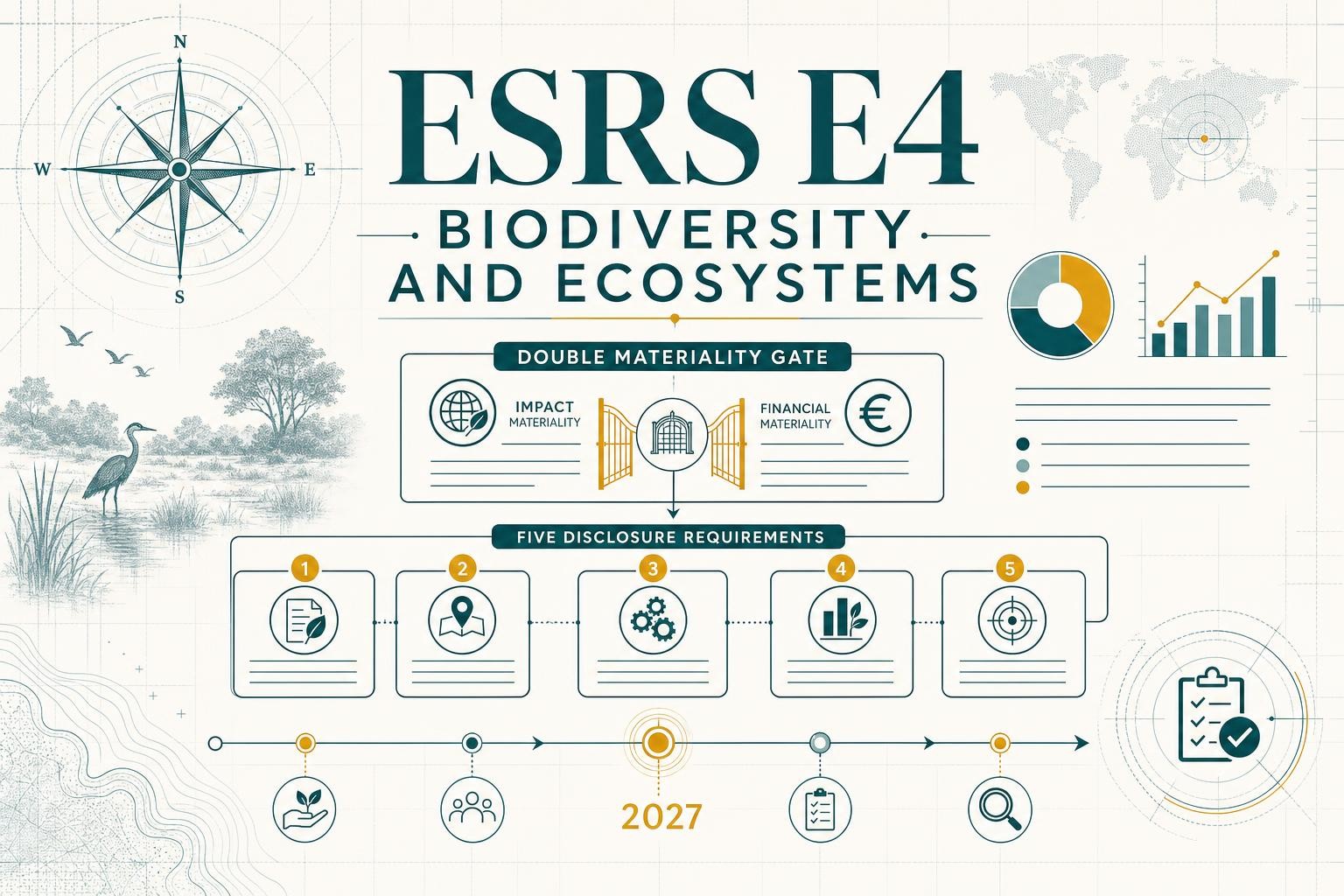
ESRS E4 Biodiversity and Ecosystems: A Practitioner's Guide for 2027 Reporting
A plain-English guide to ESRS E4 biodiversity reporting under CSRD - covering the double materiality gate, five disclosure requirements, what the simplified ESRS 2026 changed, and how E4 maps to TNFD.

ESRS E5 Circular Economy: A Plain-English Guide to Resource Use Disclosure Under CSRD
ESRS E5 requires CSRD reporters to disclose resource inflows, outflows, and waste. This plain-English guide walks through E5-1 to E5-5, key metrics, data sources, and what the simplified ESRS (2026) changed.

ESRS G1 Business Conduct: A Plain-English Guide to Every Disclosure Requirement
ESRS G1 is CSRD's only governance standard. This guide walks through G1-1 to G1-6 in plain English - what you must disclose, what data you need, and how the 2026 simplification changes things.
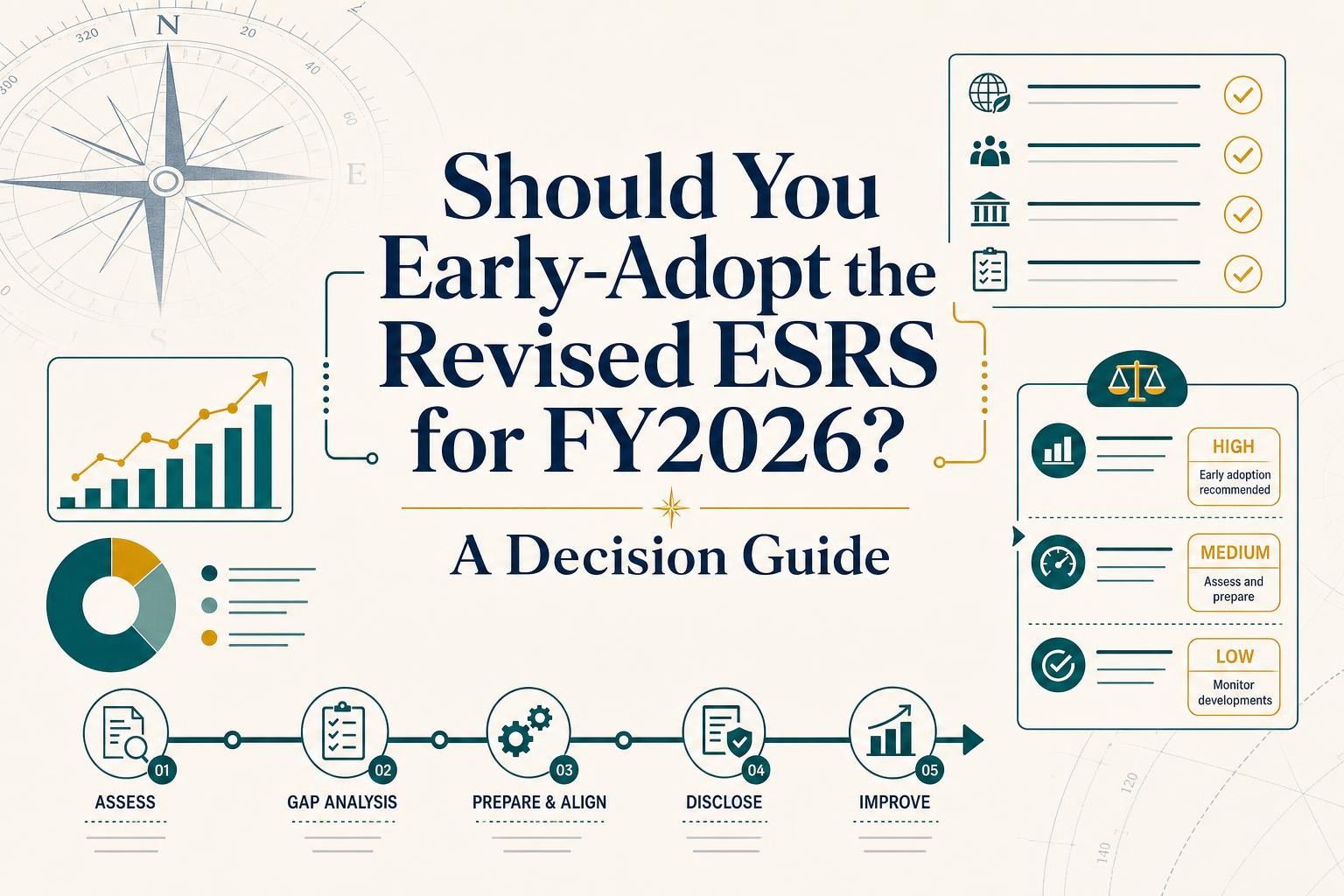
Should You Early-Adopt the Revised ESRS for FY2026? A Decision Guide
The Commission adopted the simplified ESRS on 3 July 2026. FY2026 reporters can opt in now - but should they? A practical decision guide covering the legal mechanics, the case for and against, and a clear checklist.

CSRD National Transposition Explained: Where Member States Stand and What You Should Do Now
EU directives only bind companies once transposed into national law. Here's how CSRD transposition works, where member states stand on Stop the Clock and Omnibus I, and what your compliance team should do right now.
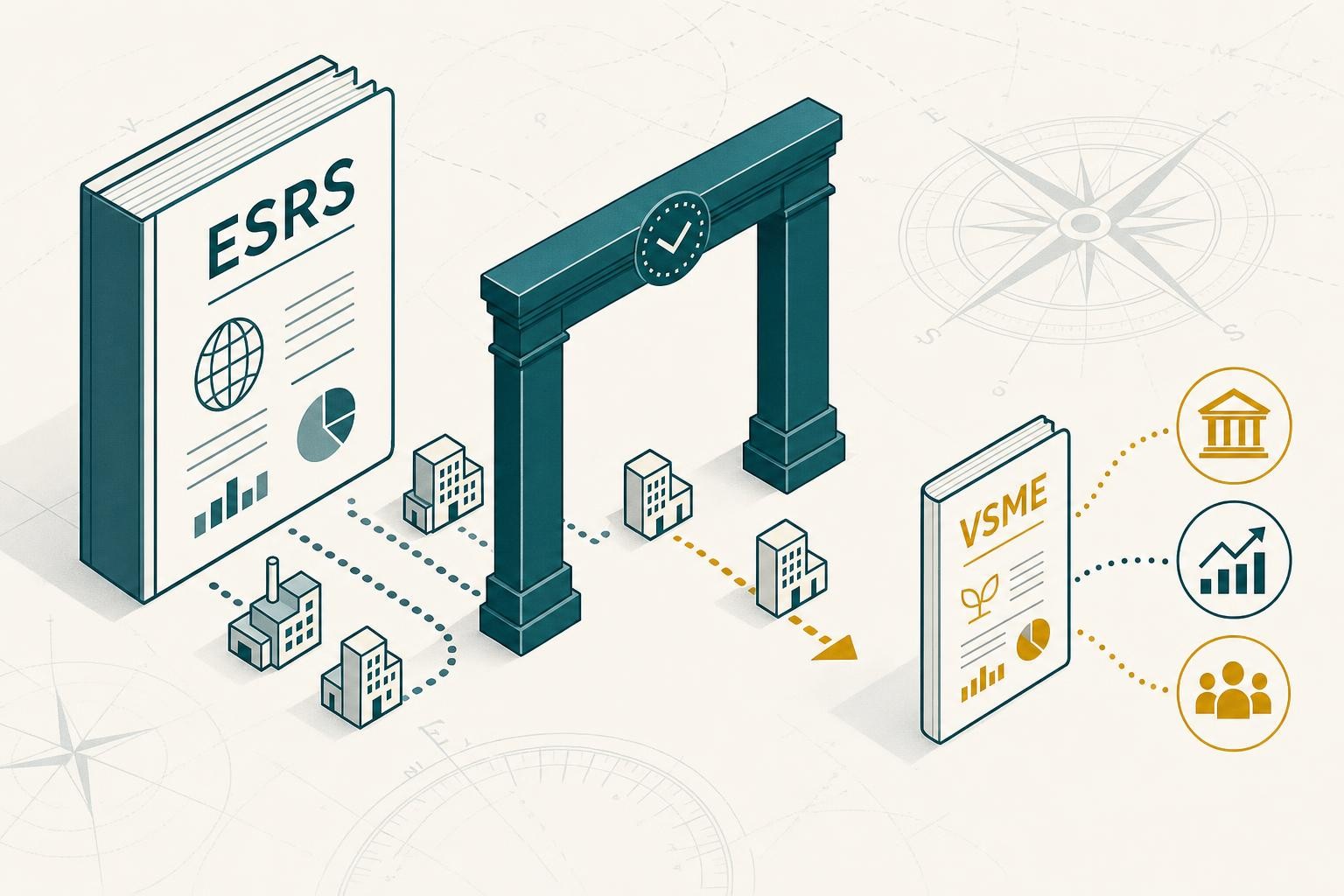
Voluntary Sustainability Reporting for Out-of-Scope Companies: The VSME Guide
The Omnibus dropped ~90% of companies from mandatory CSRD. But banks, customers and investors still ask for ESG data. Here's how to respond proportionately using the VSME standard.

ESRS E1-1: How to Build a Credible Climate Transition Plan Under CSRD
ESRS E1-1 is the strategic heart of CSRD climate disclosure. Learn what a compliant transition plan must contain - targets, decarbonisation levers, capex alignment, board approval - and how the simplified ESRS changes the picture for FY2027.

ESRS Digital Tagging Explained: The iXBRL Layer Your CSRD Report Can't Ignore
CSRD reports must be machine-readable, not just well written. A plain-English guide to XHTML, iXBRL, ESEF, the ESRS taxonomy, ESAP, and what your team should do right now.
ESRS S1 Own Workforce: A Practical Guide to the Social Pillar of CSRD Reporting
A deep dive into ESRS S1 - who counts as "own workforce", the materiality gate, what the simplified ESRS 2.0 changes, the core metrics you need, and a practical get-ready checklist.

CSRD Limited Assurance After the Omnibus: What's Settled, What's Interim, and How to Prepare
The Omnibus I Directive has permanently locked CSRD assurance at the limited level. Here's what that means, which standards apply now, and how to get audit-ready before your provider arrives.

ESRS vs ISSB vs GRI: The ESG Reporting Frameworks Compared (2026 Edition)
ESRS, ISSB, and GRI all want your sustainability data - but they want different things. Here's how the three frameworks compare in 2026 and how to avoid running parallel reporting processes.

Scope 1, 2 and 3 Emissions Under ESRS E1: A Practical Measurement and Reporting Guide
A practical guide to measuring and reporting Scope 1, 2 and 3 emissions under CSRD's ESRS E1 - covering GHG Protocol methodology, the 15 Scope 3 categories, data gaps, and what the simplified ESRS changed.
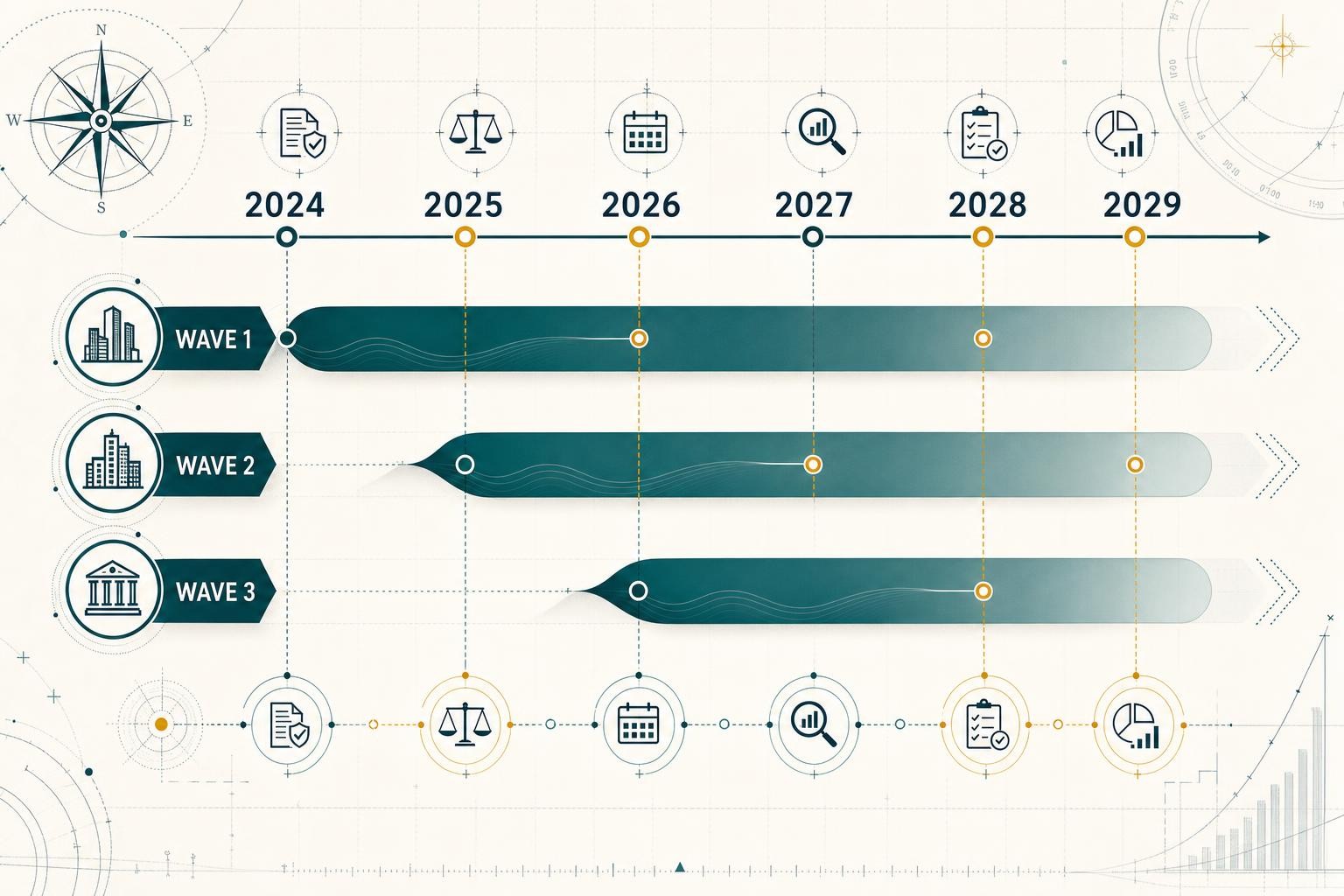
CSRD Reporting Deadlines After the Omnibus: Your Wave-by-Wave Timeline
Wave 1 already reported. Wave 2 reports in 2028. Wave 3 is mostly out of scope. Here is the definitive CSRD deadline timeline after the Omnibus, with a year-by-year breakdown.

EU Taxonomy Reporting in 2026: What Actually Changed (And What You Need to Do)
Two major changes hit EU Taxonomy reporting at once in 2026: a new 10% materiality threshold and a 64% cut in template datapoints. Here's what changed, who's still in scope, and what to do next.
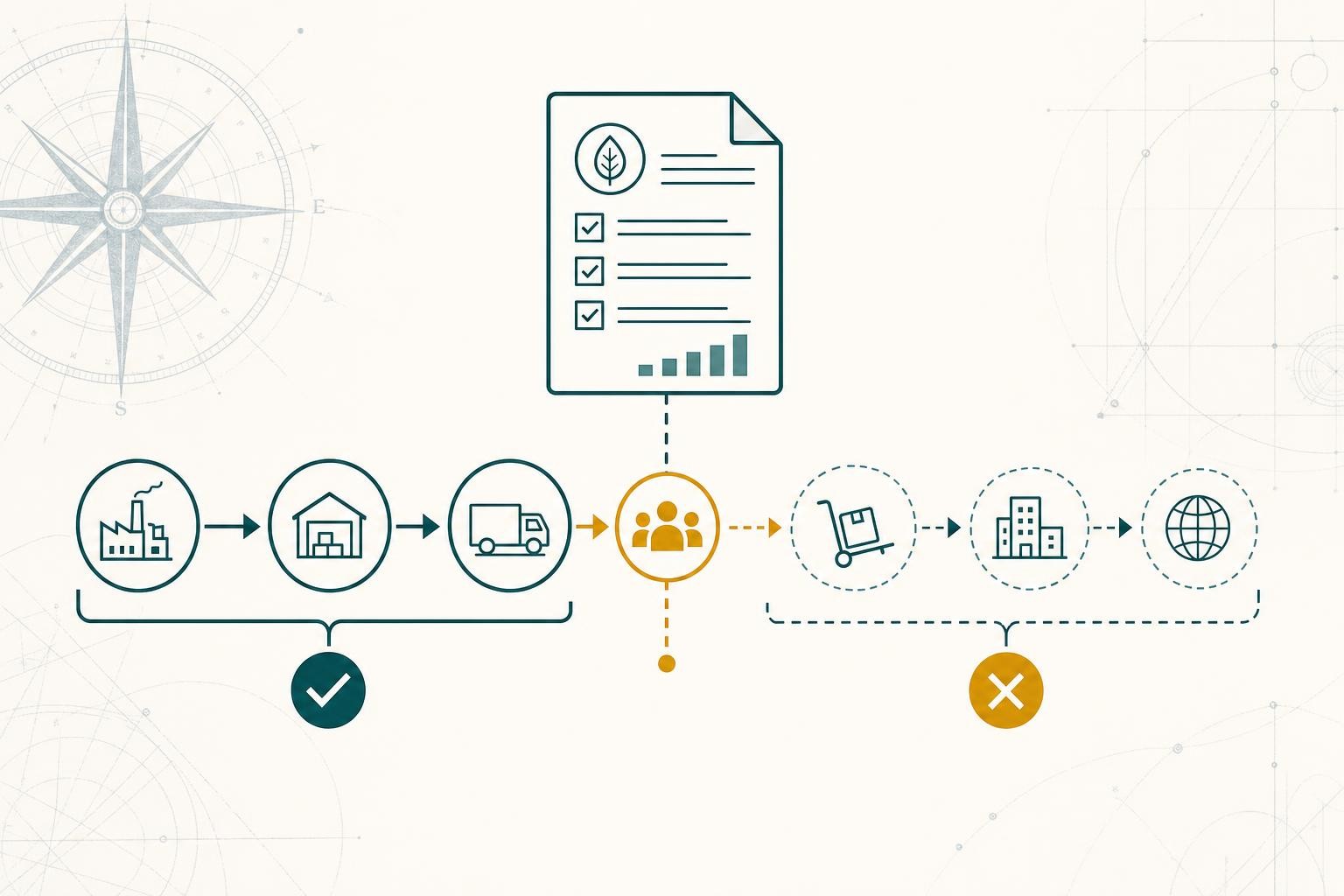
The Value Chain Cap Explained: What Large Reporters Can Ask - and What Suppliers Can Refuse
The Omnibus I Directive's value chain cap limits what CSRD reporters can demand from suppliers under 1,000 employees. Here's exactly how it works for both sides.

Double Materiality Assessment Under the Revised ESRS: A Step-by-Step Guide for 2026
Double materiality survived the Omnibus and is now the gatekeeper for your entire CSRD report. Here's how to run a defensible DMA under the simplified ESRS 1.

The revised ESRS: what the datapoint cuts mean for your FY2027 report
The Commission is simplifying the ESRS, cutting mandatory datapoints by roughly 60 to 70% and applying from FY2027. Here is what is changing, what is staying, and how to prepare while the final text is still pending.
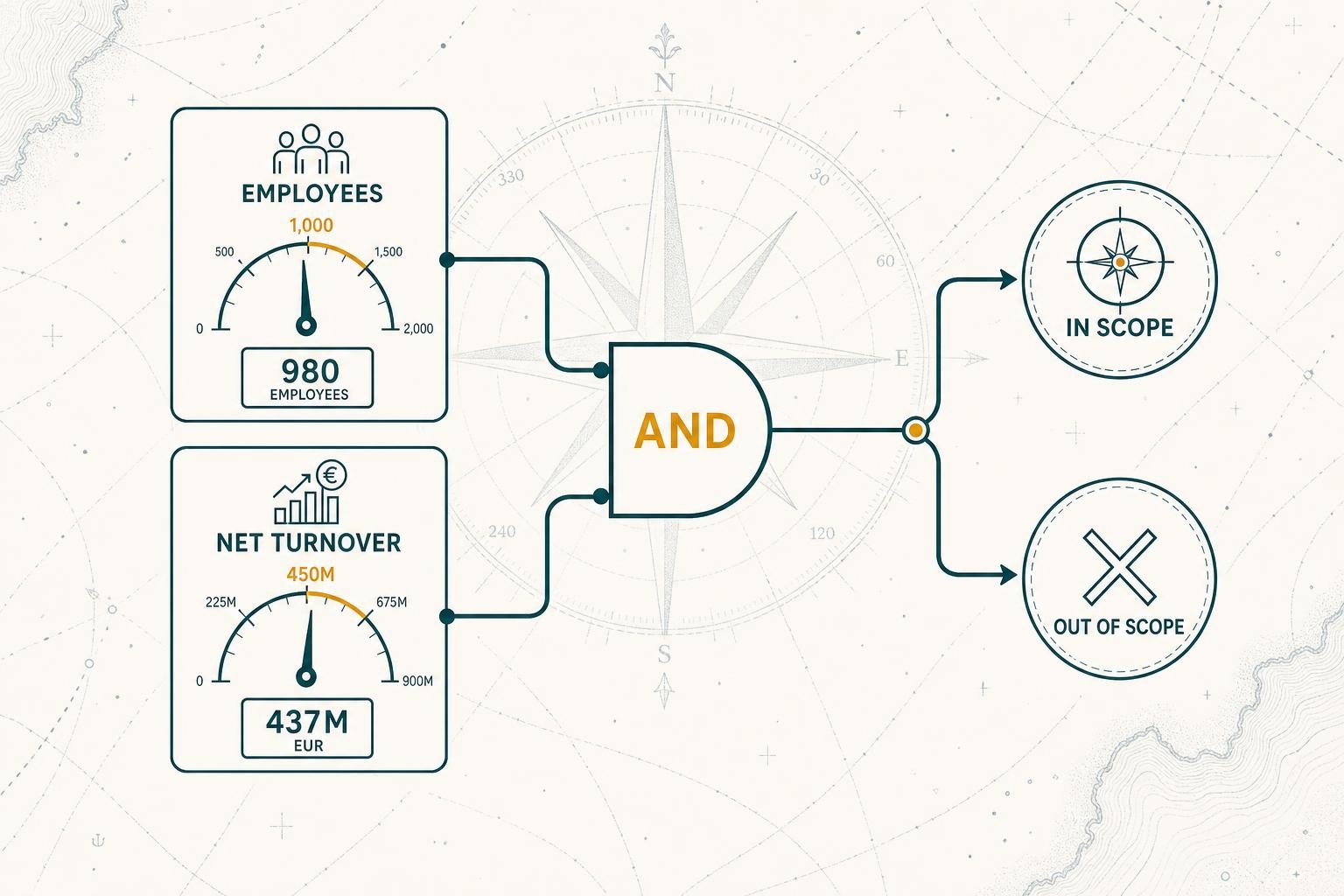
Are you still in scope for the CSRD? The new thresholds, decoded
After the Omnibus, you are in mandatory CSRD scope only if you exceed both 1,000 employees and EUR 450 million net turnover. Here is how the new test works for EU companies, non-EU groups and smaller suppliers.

The CSRD Omnibus is final: what actually changed
The Omnibus directive is in force. Here is what changed for CSRD in plain English: scope cut by about 80%, new thresholds, listed SMEs out, reporting delayed, and the ESRS being simplified.